
 Bookmark
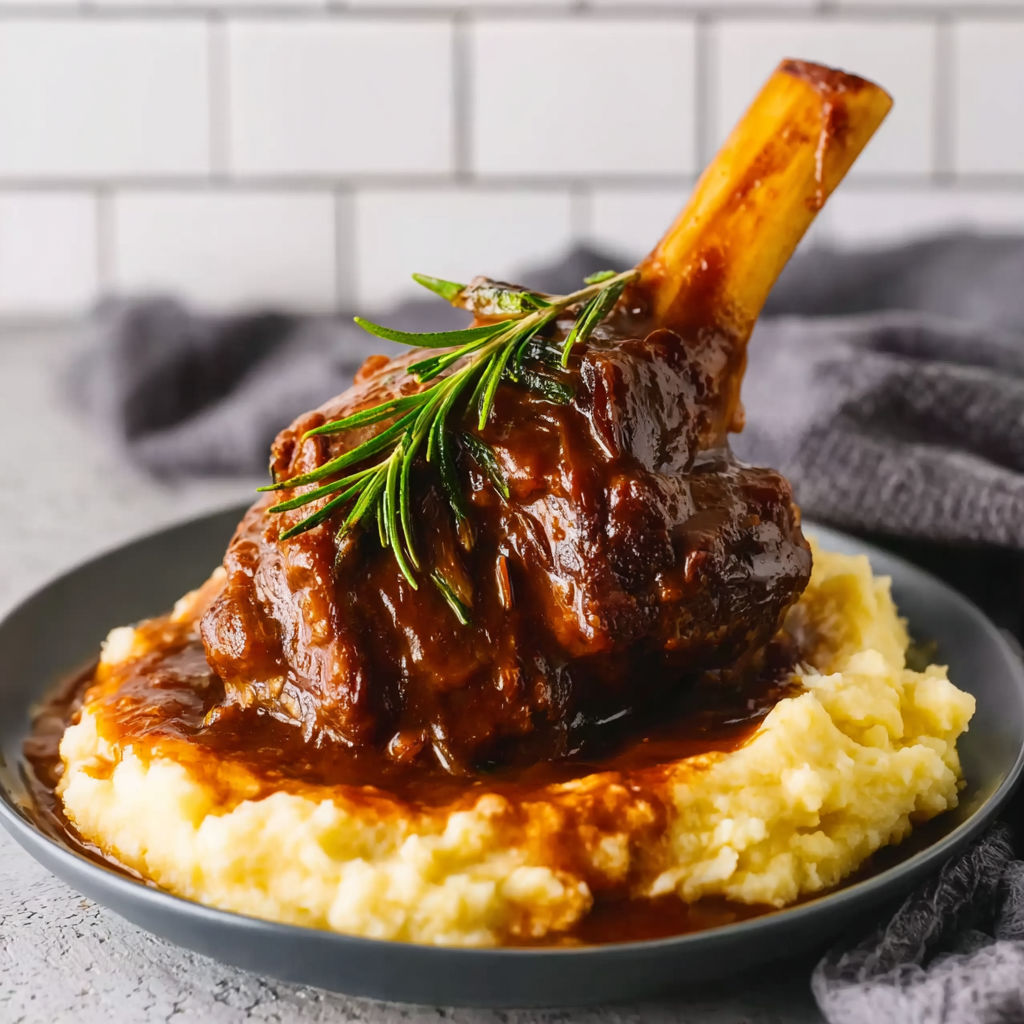
This lamb shanks braised in red wine recipe offers a wonderfully rich and comforting meal that slowly melts in your mouth. The long cooking time creates meat so tender it falls off the bone, while the wine and herbs build a deep, flavorful sauce that will have your guests swooning. Perfect for a leisurely Sunday lunch, this onepot dish is both satisfying and elegant without being complicated.
This recipe was a revelation for me during a family gathering when I wanted something impressive yet straightforward. The feedback was so positive that it quickly became a go to for holidays and special occasions alike.
Ingredients
- Vegetable oil: for browning the lamb choose a neutral oil with a high smoke point
- Four lamb shanks: the star of the dish look for shanks that are meaty and relatively uniform in size
- One onion peeled and halved: adds sweetness and depth fresh and firm onions work best
- Eight garlic cloves peeled: bring aromatic warmth fresh garlic cloves will give the most intense flavor
- Five hundred milliliters red wine: adds acidity and richness pick a dry full bodied wine you enjoy drinking
- Five hundred milliliters lamb or beef stock: builds the body of the sauce use homemade or a good quality store bought version
- One hundred twenty milliliters tomato purée: gives sweetness and thickens the sauce opt for pure tomato purée rather than paste
- Sixty milliliters brown sugar optional: balances acidity and enhances caramel notes can be omitted if you prefer less sweetness
- Two bay leaves: provide subtle herbal earthiness fresh if possible but dried works fine
- A few sprigs of thyme or one teaspoon dried thyme: fresh herbs add brightness and complexity
- Sixty milliliters cornflour: for thickening the sauce make sure it is dissolved before adding to avoid lumps
- Salt and pepper to taste: essential seasonings to enhance all the flavors
Instructions
- Sear the Lamb Shanks:
- Heat vegetable oil in a heavy bottomed ovenproof pan over medium heat. Pat the lamb shanks dry and season generously with salt and pepper. Add the shanks to the pan making sure not to crowd them and brown on all sides until deeply golden. This step locks in flavor and creates the base for a rich sauce. It usually takes about ten minutes, do not rush it.
- Cook the Aromatics:
- In the same pan add the halved onions and garlic cloves. Cook over medium heat for about five minutes until softened and fragrant stirring occasionally to take advantage of the delicious browned bits left from the lamb.
- Deglaze with Wine:
- Pour the red wine into the pan. Increase the heat slightly and let it bubble for a few minutes to reduce slightly and burn off the alcohol while capturing all the flavors.
- Add Stock and Flavorings:
- Add the lamb or beef stock tomato purée brown sugar if using bay leaves and thyme to the pan. Stir well to combine and bring everything to a gentle simmer.
- Transfer to Oven and Slow Cook:
- Cover the pan with a lid or foil and place in the preheated oven at 180°C (fan 160°C 350°F) for one hour. Then reduce the temperature to 150°C (fan 130°C 300°F) and continue cooking for another two to three hours. The lamb is ready when it pulls away from the bone effortlessly.
- Prepare the Sauce:
- Carefully remove the lamb shanks and keep warm. Discard bay leaves and herb sprigs. Transfer the remaining liquid to a blender or food processor and pulse until fairly smooth. Return the sauce to the pan to reheat gently.
- Thicken the Sauce:
- In a small cup mix the cornflour with a little water to form a smooth paste. Stir this mixture slowly into the sauce while constantly stirring on low heat. Cook until the sauce thickens to your preferred consistency.
- Serve and Enjoy:
- Arrange the lamb shanks on plates or a serving dish pour the sauce over or serve on the side in a gravy boat and accompany with creamy mash and steamed greens or roasted vegetables.
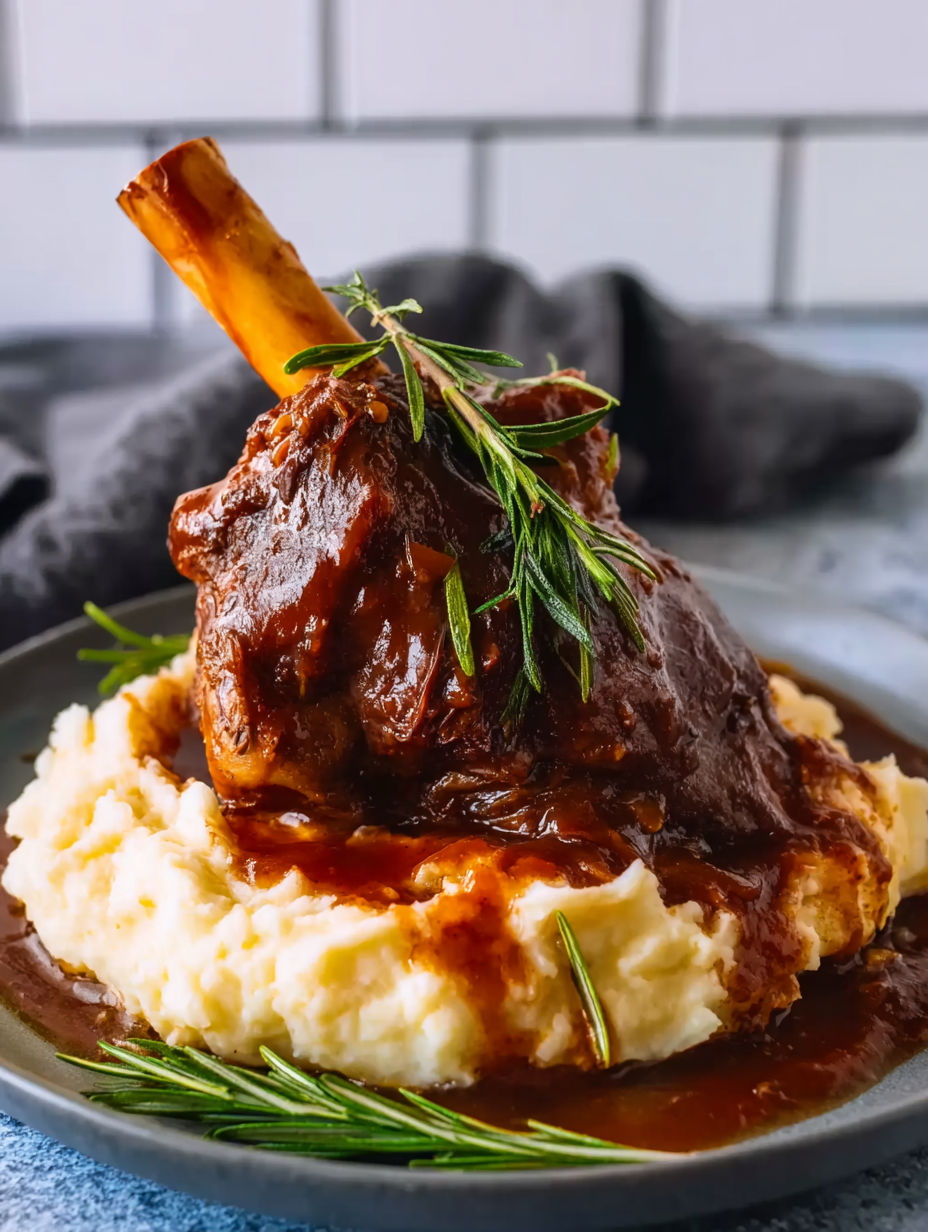
I always take a moment to inhale the simmering pot, it brings back memories of cozy family dinners and the comforting anticipation of a hearty meal.
Storage Tips
Let leftovers cool completely before transferring to an airtight container. Keep refrigerated for up to four days. When reheating do it gently on the stove to retain moisture and flavor. Avoid microwaving if possible as it can dry out the lamb.
Ingredient Substitutions
If red wine is not an option you can swap it with extra stock or a non alcoholic red wine alternative. Rosemary works beautifully instead of thyme for a slightly different herbal note. Tomato paste can replace tomato purée just use about half the quantity due to its concentration.
Serving Suggestions
Creamy mashed potatoes are the classic pairing but polenta or buttery noodles also work beautifully to soak up the sauce. Roasted root vegetables or steamed greens add freshness to balance the richness. A glass of the same red wine served with the meal ties the whole experience together.
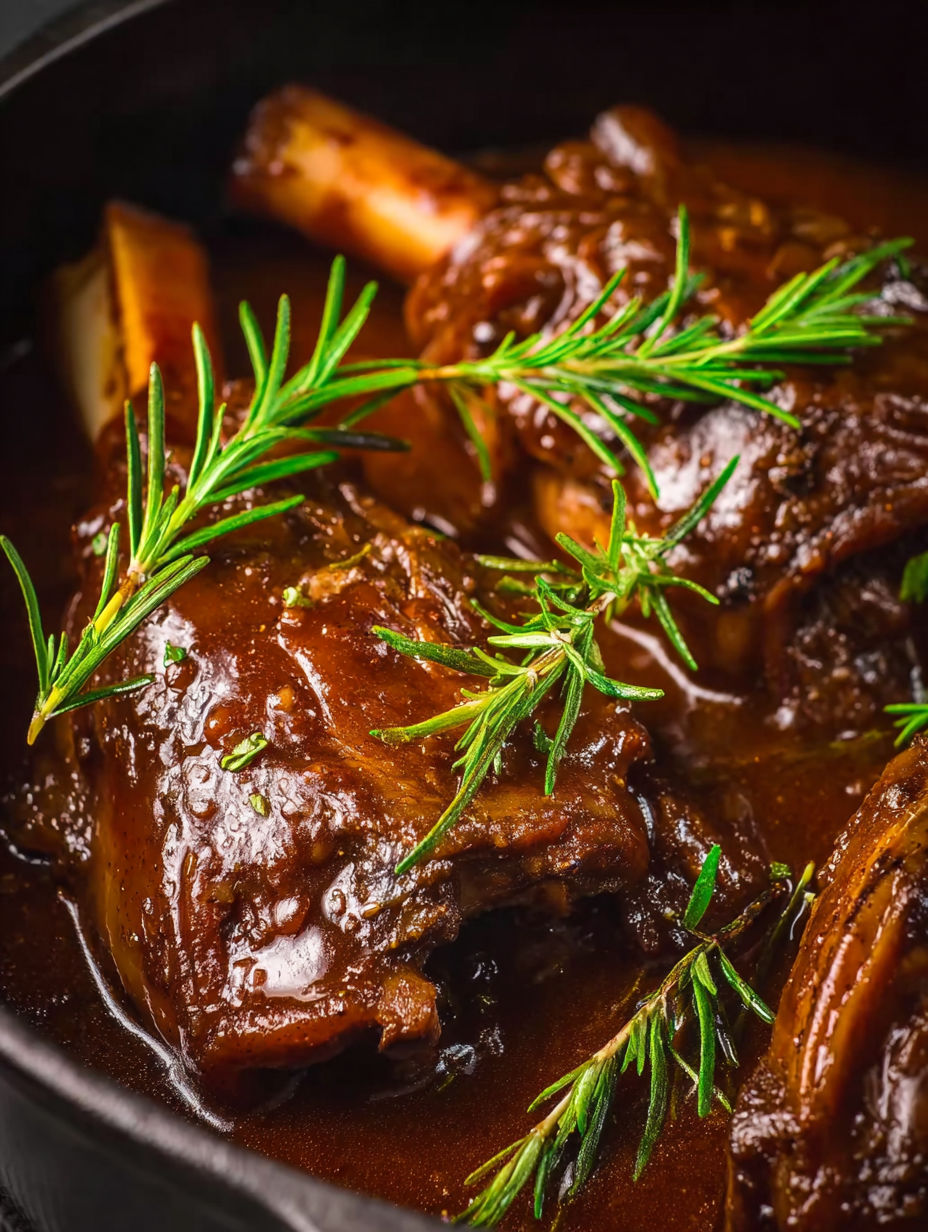
Serve the lamb shanks with creamy mash or roasted vegetables and a good pour of the same red wine. Slow cooking turns humble ingredients into a deeply satisfying meal.
Common Recipe Questions
- → What cut of lamb is ideal for this dish?
Lamb shanks come from the lower part of the leg and are perfect for slow cooking due to their connective tissue, which breaks down to become tender and flavorful.
- → How does braising affect the texture of the meat?
Braising combines a high-heat sear and slow cooking in liquid, resulting in meat that is tender, juicy, and infused with rich flavors.
- → What wine pairs best with lamb shanks braised in red wine?
Dry, full-bodied red wines like Merlot, Pinot Noir, or Cabernet Sauvignon work well, adding acidity and depth to the dish.
- → Can I use a slow cooker instead of the oven?
Yes, slow cooking is a great alternative. Just be sure not to overfill the cooker to allow for even cooking and proper browning beforehand.
- → How do I thicken the red wine sauce?
Mix cornflour with a little water to create a slurry, then gradually stir it into the sauce while heating until it reaches the desired thickness.
- → What side dishes complement this slow-cooked lamb?
Mashed potatoes, polenta, or roasted vegetables pair beautifully, soaking up the rich braising sauce.